Learn how to spot fake job ads in South Africa, avoid employment scams, and protect yourself when applying for jobs, internships, or learnerships online.
Table of Contents
Understanding Fake Job Ads in South Africa and Why Job Scam Awareness Is Essential
Searching for a job in South Africa can already be challenging. For many young people, matriculants, and first-time job seekers, finding a legitimate opportunity takes time and persistence.
Unfortunately, scammers take advantage of this situation.
Every year, thousands of South Africans fall victim to fake job advertisements. These scams often promise quick employment, high salaries, or guaranteed placement in learnerships and internships.
Because of this, job scam awareness has become an essential skill for job seekers.
Understanding how fake job ads work, recognising warning signs, and verifying opportunities before applying can help protect your money, identity, and future career prospects.
Learning how to identify fraudulent job offers is just as important as learning how to write a CV or prepare for interviews.
Why Fake Job Ads Are So Common in South Africa
Fake job advertisements are widespread because scammers know how desperate many job seekers are for employment.
South Africa continues to face high unemployment rates, especially among youth. This creates an environment where fraudulent opportunities can easily spread.
Scammers typically target:
- Matriculants and school leavers
- Unemployed youth
- First-time job seekers
- People searching for internships or learnerships
Because these groups are actively searching for opportunities, they are often more vulnerable to convincing job scams.
Scammers also use professional-looking graphics, official-sounding names, and social media platforms to make fake opportunities appear legitimate.
Common Types of Fake Job Ads That Job Seekers Must Learn to Identify
Understanding the common types of employment scams is the first step toward protecting yourself.
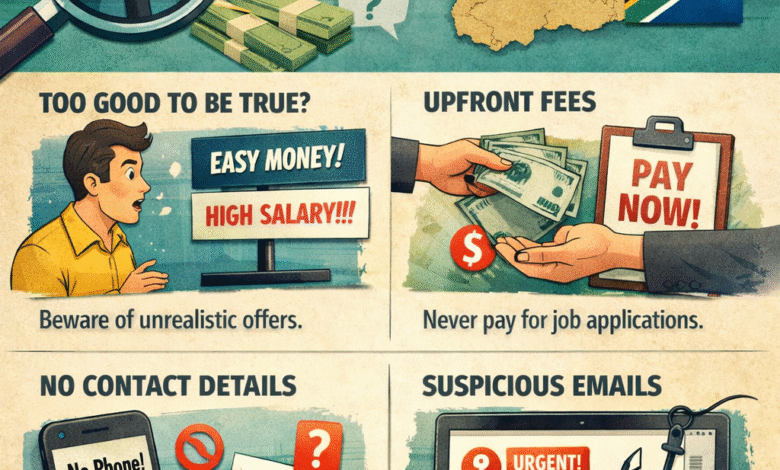
Jobs That Require Upfront Payments
One of the most common job scams involves payment requests.
Scammers may claim that applicants must pay for:
- Registration fees
- Training before hiring
- “Processing” or administration fees
- Background checks
In reality, legitimate employers do not charge candidates to get hired.
Any job that asks for payment before employment should immediately raise suspicion.
Unrealistic Salary Promises
Another common tactic is promising extremely high salaries for simple work.
Examples include ads claiming:
- Earn thousands per week with no experience
- Guaranteed income with minimal effort
- High pay for basic online tasks
These promises are designed to attract attention and pressure people into applying quickly.
If an opportunity sounds too good to be true, it usually is.
Fake Learnerships and Government Jobs
Scammers often misuse government logos or claim connections with public institutions.
Fake advertisements may claim partnerships with:
- Government departments
- Training authorities
- Youth employment initiatives
These scams rely on the trust people have in official programs.
Always verify opportunities through official websites before applying.
Key Signs of Fake Job Ads in South Africa Every Job Seeker Should Know
Recognising warning signs can help you avoid dangerous scams.
Poor Language and Spelling
Many fraudulent job advertisements contain obvious spelling mistakes or poorly written descriptions.
Legitimate companies usually communicate professionally and clearly.
Missing Company Information
Real job ads normally include verifiable details such as:
- Company name
- Physical office location
- Official website
- Corporate email address
If these details are missing, the job ad may not be legitimate.
Free Email Addresses Instead of Company Domains
Scammers often use free email accounts such as:
- Gmail
- Yahoo
- Outlook
Legitimate companies typically use professional email domains linked to their official websites.
Pressure and Urgency
Fake job ads often include phrases designed to rush applicants.
Examples include:
- “Apply immediately”
- “Limited spaces available”
- “First come, first served”
This urgency prevents people from verifying the opportunity.
How to Verify a Job Ad Before Applying for Any Opportunity
Before submitting your CV or personal information, always verify the opportunity.
You can start by doing the following checks:
- Search the company name online
- Visit the company’s official website
- Look for reviews or scam warnings
- Confirm the job listing through trusted platforms
You can also learn how to protect yourself by reading our Job Scam Awareness Guide
Social Media and WhatsApp Job Scams Are Increasing Rapidly
Many fake job advertisements spread quickly through social media platforms.
Common platforms used by scammers include:
- WhatsApp groups
- Facebook pages
- Telegram channels
These scams often ask applicants to send messages privately or contact a personal phone number.
Be cautious if:
- The page was recently created
- Comments are disabled
- There is no company website
Legitimate employers usually advertise through official platforms or company websites.
A Typical Day in the Life of a Job Scam Awareness Specialist
While job scam awareness is important for job seekers, some professionals actually work in roles dedicated to identifying and preventing fraud.
Professionals involved in scam prevention may spend their day:
- Monitoring suspicious online job advertisements
- Investigating reports of employment scams
- Educating job seekers about safe job searching
- Collaborating with law enforcement agencies
Their goal is to protect the public and ensure that job seekers have access to legitimate opportunities.
Career Specializations in Fraud Prevention and Job Scam Awareness
If you are interested in preventing scams and protecting the public, several career specializations exist in this field.
These include:
- Cybercrime Investigation
- Digital Fraud Analysis
- Online Safety Education
- Consumer Protection Advocacy
- Financial Crime Prevention
These roles combine technology, research, and public awareness to combat fraud.
How Long It Takes to Enter a Career in Fraud Prevention or Online Safety
Entering careers related to fraud prevention usually requires education and specialized training.
Typical pathways may include:
- 2 to 3 years for diplomas in cybersecurity or information security
- 3 to 4 years for university degrees in criminology or cybersecurity
- Additional professional certifications in fraud detection or digital security
These qualifications help professionals understand online threats and develop systems to detect scams.
Related Careers You Should Consider
If you are interested in online safety, fraud prevention, or consumer protection, you may also consider careers such as:
- Cybersecurity Analyst
- Fraud Investigator
- Digital Forensics Specialist
- Consumer Protection Officer
- Risk and Compliance Analyst
- Law Enforcement Cybercrime Specialist
These careers play a crucial role in protecting individuals, businesses, and financial systems.
What To Do If You Have Been Scammed
If you believe you have been targeted by a fake job advertisement, take action immediately.
Steps to take include:
- Stop communication with the scammer
- Do not send additional money or documents
- Report the incident to authorities
In South Africa, employment scams can be reported to the South African Police Service, which handles fraud and cybercrime investigations.
Reporting scams can help prevent others from becoming victims.
How JobConnec.org Helps Job Seekers Stay Safe
At JobConnec.org, the goal is to support job seekers with reliable information and career guidance.
The platform focuses on:
- Sharing legitimate job opportunities
- Educating readers about employment scams
- Providing career development resources
You can learn more about the mission of the platform by visiting the About Us page
For additional career insights and long-term planning advice, you can also explore our career development resources.
Final Thoughts on Avoiding Fake Job Ads in South Africa
Fake job advertisements remain a serious challenge for job seekers.
However, with the right knowledge and awareness, many scams can be avoided.
Always remember these key rules:
- Legitimate jobs do not require upfront payments
- Real employers provide verifiable company details
- Urgency and secrecy are common scam tactics
By staying informed and cautious, you can protect yourself and focus on legitimate career opportunities.
Being aware of scams is not only about safety — it is about protecting your future.
Disclaimer: Jobconnec.org is an independent job information website. We do not charge any fees for job applications and are not affiliated with the employers listed. Always apply through official employer channels and verify details independently.